University of Cambridge

Undergraduate

Study

Architecture

The only course at the University that combines the intellectual challenge of a Cambridge degree with the opportunity for creative design.


UCAS code K100 BA/Arch

Duration Three years

Colleges Available at all Colleges except Corpus Christi, Homerton, Hughes Hall and St Catharine's

2011 entry Applications/places: 10
Number admitted: 44

Open days and events 2012 College open days (arts)
Cambridge Open Days - 5 July, 6 July

Related courses
Contact details 01223 332950
arct-info@lists.cam.ac.uk
www.arct.cam.ac.uk

Overview

Amazing architectural heritage

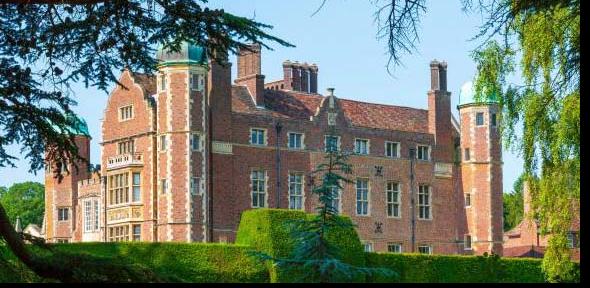
Cambridge's beautiful buildings include the work of great architects including Sir Christopher Wren, Sir James Stirling, Edward Cullinan and Sir Michael Hopkins. The teaching is ranked among the best in the country, and there's an outstanding record of graduate achievement.

Our course is academic in approach, emphasising architecture as a cultural as well as technological subject. The core of the teaching programme is in practical design carried out in studios (from the large scale of a city to the smallest detail), and supported by lectures which draw upon the humanities (history and theory) and sciences (construction, environmental design and structures).

Our small and friendly Department has a very good staff/student ratio and we have a superb library, dedicated computer facilities and photographic areas. The Department provides studio space and workshop facilities.

Professional qualification

Successful completion of our full three-year undergraduate course carries exemption from the Royal Institute of British Architects' (RIBA) Part 1 examinations - the first stage in qualifying as an architect.

The Department offers a RIBA Part 2 validated option in its Environmental Design in Architecture MPhil and a Part 3 course through the University's Institute of Continuing Education as well.

What we're looking for

An enthusiasm for both the arts and the sciences is desirable. The ability to draw and an interest in the history of art and architecture are important, as is a knowledge of mathematics to at least a good GCSE standard.

Careers and research

Most graduates continue into professional training, but a number enter research. We have a long-standing tradition of research excellence, in areas such as history and philosophy of architecture, environmentally-responsible design, architecture and the moving image, urban design and transport planning, and disaster relief.

Course outline

Throughout the course, you have two 'studio' days each week for set projects which require you to produce models and drawings to communicate your design ideas.

You're supervised on these weekly during individual studio tutorials and critical reviews which encourage you to explore different approaches and develop skills. The resulting portfolio accounts for 60 per cent of the overall marks each year.

Lectures, classes and visits to completed buildings or buildings under construction/restoration cover the rest of the curriculum. You attend a lecture a week on each paper as well as small-group supervisions, for which you're required to complete essays and undertake preparation.

Year 1 (Part IA)

Studios introduce the possibilities of architecture, with an emphasis on understanding and developing proficiency in traditional modes of architectural representation – models, collage, perspectives, elevations, plans and sections. You also master basic CAD skills, used in studio presentations.

You take five lecture-based papers:

  • Introduction to Architectural History/Theory (pre-1900)
  • Introduction to Architectural History/Theory (post-1900)
  • Fundamental Principles of Construction
  • Fundamental Principles of Structural Design
  • Fundamental Principles of Environmental Design

Assessment is through coursework and written examinations.

Year 2 (Part IB)

You choose from various options for studio work, with projects ranging in scale from mapping studies and interior interventions, to a reasonable-sized building. Emphasis is on integrating the technical skills learnt in Part IA and in the ongoing Part IB lectures with your studio output.

In addition, you take four papers that build on Part IA knowledge:

  • Studies in History and Theories of Architecture, Urbanism and Design
  • Principles of Construction
  • Principles of Structural Design
  • Principles of Environmental Design

For the first, you submit two essays and sit a written examination. The remaining three papers are assessed by a written exam in each.

Year 3 (Part II)

You choose from three studio options which vary in approach but all require you to produce a building design at the end of the year whose technical realisation is allied to a coherently framed conceptual approach.

Four lecture-based papers together carry 20 per cent of your overall marks:

  • Advanced Studies in Historical and Theoretical Aspects of Architecture and Urbanism
  • Management, Practice and Law
  • Advanced Studies in Construction Technology, Structural Analysis and Environmental Design Related to Case Studies
  • Architectural Engineering (examined by coursework)

A written dissertation of 7,000-9,000 words on a topic of your choice accounts for the remaining 20 per cent of your marks.

Entry requirements

Typical offers require
A Level:
A*AA
IB: 40-42 points, with 776 or 777 at Higher Level
For other qualifications, see our main Entrance requirements pages.

Course requirements

Essential: No specific subjects
Desirable: AS Level/IB Standard Level Mathematics or Physics

There is no prescribed combination of A Level (or equivalent) subjects required for the Architecture course. Applicants with backgrounds in either the humanities or the sciences have been successful, although a combination of arts and science subjects is considered the best preparation. The majority of applicants have studied Art or History of Art, which provides a better preparation for the course than subjects such as Design Technology and Technical Graphics. Mathematics at A Level (or equivalent) is also encouraged.

A strong interest and commitment to the discipline is essential and all applicants are expected to show a portfolio of recent work at interview (see box below).

Fitzwilliam and Sidney Sussex require Mathematics at A Level.

Portfolio advice

All applicants are expected to show a portfolio of recent work at interview but this isn't expected to be work of an architectural nature (eg plans, sections etc).

Admissions Tutors will want to see something that will illustrate your interests, experience and ability in the visual and material arts. Normally drawing and painting forms the basis of the portfolio but other media such as sculpture and photography may also be included. It's usually sufficient for three-dimensional work to be exhibited in photographs.

A sketchbook with ongoing drawings is extremely helpful and applicants are encouraged to take one to the interview. It may be in any media (pencil, charcoal, crayon etc) and should include a variety of subject matter. The work can be material prepared for school-leaving examinations but creative work executed outside formal courses is also welcome.

Portfolio requirements vary from College to College. Please see individual College websites for further guidance.

Admissions tests and written work

The table below sets out the ways in which each College assesses applicants for this subject. For more information about these methods of assessment and why we use them, see the main Admissions tests and written work page.

Please note: in addition, all applicants for Architecture are expected to show a portfolio of recent work at interview.

College Assessment of applicant for this subject
Christ's Portfolio review at interview
Churchill School/college essays and portfolio review at interview
Clare An exercise/project to be done at home in advance of interview
Corpus Christi Not available at this College
Downing Interview only
Emmanuel Preparatory study before interview
Fitzwilliam Written/drawing assignment prior to interview
Girton Written/drawing assignment prior to interview
Gonville & Caius Portfolio review at interview
Homerton Not available at this College
Hughes Hall Not available at this College
Jesus Test at interview
King's Interview only
Lucy Cavendish Test at interview; Drawing test; Portfolio review at interview
Magdalene Written/drawing test prior to interview
Murray Edwards Preparatory study before interview; Portfolio review at interview
Newnham School/college essay; portfolio review at interview
Pembroke Sketch to be submitted before interview; Written test at interview.
Peterhouse Project set by College
Queens' Interview only
Robinson Interview only
St Catharine's Not available at this College
St Edmund's Project set by College; Portfolio review at interview
St John's School/college essay; Portfolio review at interview
Selwyn Portfolio review at interview
Sidney Sussex Portfolio review at interview
Trinity Test at interview
Trinity Hall Interview only
Wolfson Written/illustrated pre-interview task; Portfolio review at interview
How to apply

If you are interested in applying for this course, please see our Applying section for more details.

Further Resources

Find out more about Architecture at Cambridge

  • Course website - Explore Architecture in more detail on the course website.
  • Studios guide - A guide to the studios which form the core of design teaching for the Architecture tripos

Tools to help you with your Architecture application

The student experience

  • ArcSoc - Find out more about the Cambridge University Architecture Society and what they get up to.